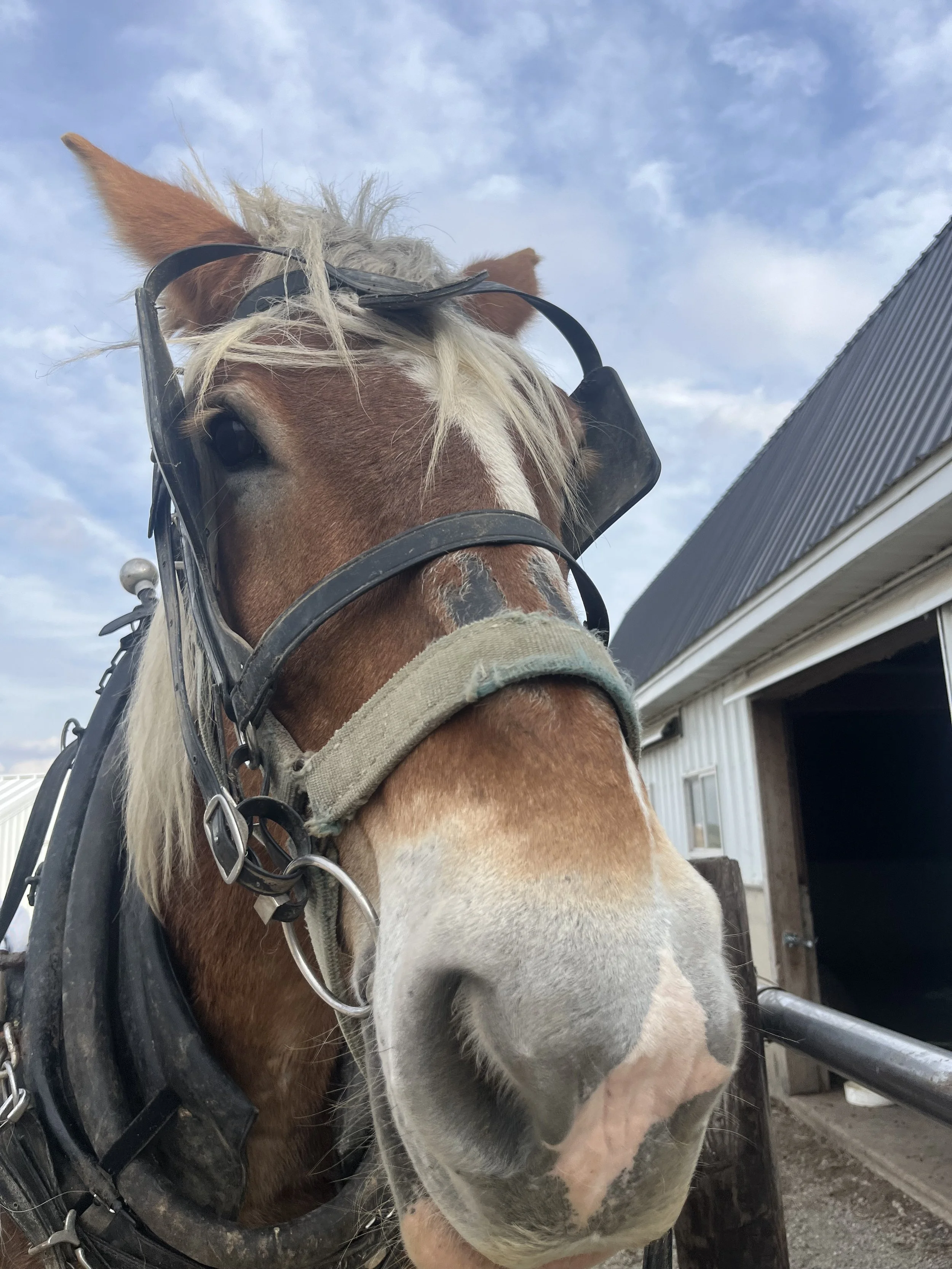
Hiring a Horse
I took a team for a test drive last week and a friend of mine asked what I was looking for. It was a good question with a long answer. I’ll admit I’m fairly inexperienced at buying horses, but working with half a dozen everyday has helped me develop a better sense of the attributes I was looking for, and I have a series of quick little tests that I used to give me a clue as to what is happening internally for this animal and what that could mean for us longterm.
First impressions - I’d like to see an animal that’s in good body condition, reasonably clean, with decent feet and clear eyes. I’m always aware of their living quarters and if I will have them in a similar environment or how challenging that transition may be. I’d like them to be aware of my presence but not nervous. If they decide to approach or sniff me that’s great, and I’ll extend a hand or maybe give them a little shoulder pat if they seem comfortable with that. Once we’ve made contact I’m feeling them everywhere for lumps, bumps, collar sores, shoulder or hip tension… I want to know if this animal has been overworked or if they have a lot of miles behind them if they’re going to need an early retirement, lighter workloads, or a little extra TLC like stretches and joint supplements. Age, health, and fitness are not the same thing. This first impression and pat down has probably taken about two minutes. I’ve also likely picked up their feet and checked their teeth.
Next we’ll probably go for a drive. I’m watching how the owner harnesses. Asking what size collar, making a mental note of what style bit they use. Did the animal put their head through the collar? Are they standing quietly or pawing or distracted or showing any nervous ticks? Are they patient during hitching? I’ll watch the seller drive and I’m watching their style but mainly watching how this animal moves. Is their head low and relaxed? Are their ears set back and listening? Are they sluggish to start or slow to stop? I’m especially dialed into their feet and legs and looking for any signs that they aren’t sound.
Then I take the lines. I will drive differently than their owner. How will they manage that? How much line pressure do they need? How are the brakes? If I give them the option do they spin on a dime or float around in a wide lazy circle? How do they act when we turn back toward the barn? Do they pick up the pace or get distracted? Will they listen just the same heading home as they did a moment ago? Will they let me drive or do they think they have all the answers? When we get back home and unharnessed then I have one more little check.
Most work horses are more familiar with harnessing and driving than ground work and so you can learn a lot about an animal taking off their blinders and putting them on a lead rope. For some horses this is where all of the nerves will show up. I don’t do anything fancy. I walk and stop and see if they will watch me, if not, will they stop when I ask them to? I’ll do some tight circles really watching how they bend and if they respond to light pressure. I definitely want to find something I know they’ve never done and ask them to try it. This might be starting and stopping. It might be directional backing or even side passing. I might also try to get them to respond to just a voice cue. Anything that could be a little challenging or new, not to see if they can learn a new trick in 30 seconds, but to see if they are flexible and willing to try. Some animals aren’t interested in this at all. Others get frustrated very quickly when they don’t understand what you want. I’m looking for an animal who is willing to try and patient with themselves and me while we’re figuring it out. Even if they don’t get it at all if they try and don’t give up that’s all I need to know about them.
Lastly I might do some of our routine stretches. This will be one more new weird thing for them to digest and also looking one more time for stiffness or imbalance. A lot of older horses who’ve been worked in one position may be less flexible on one side than another (the side that doesn’t bend is the one where the tongue was) but I have also seen this as a learned behavior that happens in harness but NOT in stretches or groundwork so it’s not actually muscular, but just a habit.
After all of this I’m going to look them in the eye one last time. Are they wide eyed and just bluffing that they’re playing it cool? Are they checked out and on autopilot? Are they responsive and aware, but calm? Do they have a kind, soft eye? I’m looking for a partner that’s going to show up with me to work every single day and give it their best. They don’t have to be perfect. They don’t have to have all the answers. They just have to be willing to show up and we will figure out the rest together.